
What’s really going on with that label? LILA Gazette explains the rules and regulations that were put into place to create this label and several examples of modern food ingredients.

By Malachi Newman and Eshan Lyall – 6th grade.
What is this label exactly?
This label was created by the Food & Drug Administration (FDA) as a way for food manufacturers to honestly show to the public what was in the products that they were selling. It helps you know what exactly you are eating. It includes the serving size, the amount of servings in the container, the allergens in the product, the amount of calories, and much more.
Which other countries require that label?
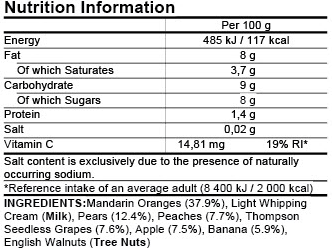
There are several other countries that require the nutrition label. This includes: The European Union (EU), Brazil, Russia, Japan and more. The nutrition label, of course, differs with these countries. So here are some examples:
EUROPEAN NUTRITION LABEL
BRAZILIAN NUTRITION LABEL

JAPANESE NUTRITION LABEL

OLD VS. NEW FDA LABEL

First, you probably thought that there has only been one nutrition label from 1994, but did you know that the nutrition facts label received an update in 2016? In this section we will be comparing the two and discussing how it has changed with the update.
As you can see, the new label highlights important parts, also if you only want to know about calories, that’s in huge letters. Another thing that the new label adds is trans fat to help you understand how much fat there really is in the product. It also makes everything bigger, helping visually impaired people. They also put the footnote on the bottom which helps highlight the facts, and bolded percentages which are also helpful for visually impaired people.
THE INGREDIENTS SECTION
The “Nutrition Facts” label contains a section for the ingredients that the product contains. Long ago, most products that were made contained simple ingredients, many of which were organic. Those products contained at most five ingredients solely. Nowadays, it’s usually many more. A lot of these modern ingredients are not food and are very bad for your body. Here are some examples:
PALM OIL
Palm oil is an ingredient manufactured by burning palm trees and extracting the juice out of their fruit, it is incredibly damaging to the environment as to make these plantations, companies will burn down entire rainforests. Luckily, there is a way to make this a lot more environmentally friendly. A lot of companies have started using that method instead. They both have pretty much the same steps:The reception of fresh fruit bunches from the plantations, sterilizing and threshing of the bunches to free the palm fruit, mashing the fruit and pressing out the crude palm oil. The crude oil is further treated to purify and dry it for storage and export.
CORN SYRUP
Corn syrup is an artificial sweetener. It is made by extracting and refining the glucose (sugar type) in corn. This artificial version of cane sugar is extremely bad for your body, especially the high-fructose variant. High-fructose corn syrup (HFCS) is 55% fructose (another sugar type) which is a lot harder for your body to break down. If you have too much of this product, it can lead to serious health problems.
DEXTROSE
Dextrose is a type of sugar almost identical to glucose, it is used as an artificial sweetener or preservative. Which is fine, except for one thing: your body cannot break it down, now, that does not mean that the dextrose stays inside of you, it just means that less of it is used as your body must convert it into glucose.
In conclusion, the “Nutrition Facts” label has been a part of modern food manufacturing for a long time. It has gone through many modifications and versions. It is important to watch out for what you’re eating; stay aware.
Esha Research was used as a comparison source in this article.




 lilagazette.com
Leave a comment