
Climbing, a mysterious yet intriguing sport, has, in recent years, managed to find its footing among competitions and as a hobby. With a changed image and more inclusive community, it’s become known around the world.
By Thomas Cayetanot – 12th grade.
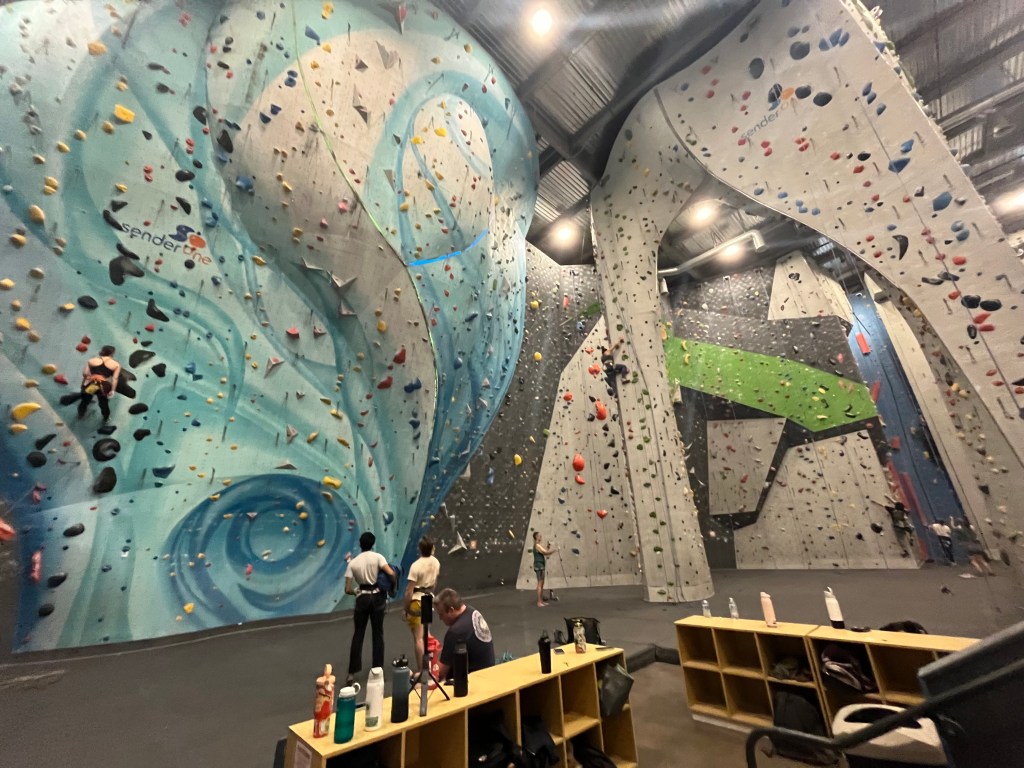
Walking up to the building, opening the door, instantly, the dry and earthy smell of chalk hits you. You scan your card and arrive at an immensely open space filled with ropes hanging down from every corner and a warm atmosphere. Protruding and angular walls are spotted with a multitude of colorful holds. The booming sound of people and music hits your ear, as you stare in awe at how some are able to climb up routes like spiders. You jump up on the thick padding laid out on the ground and grab the coarse rope to tie yourself in. All you can do is be hypnotized at the wall in front of you, staring at it, trying to figure out how you’ll make it all the way up. Reaching into the chalk bag, that same dry and earthy smell hits you as you start to ascend the wall.
This is what a typical climbing gym feels like. And they have been sprouting everywhere around the world. Rock climbing and its various forms have always been present throughout human history, whether it be a recreational activity or to reach a location. But it started to become a professional and specialized sport when its fundamentals were revolutionized for the first time, in the early 20th century. Climbers in Germany and Italy started to develop gear and rope handling techniques that would evolve for the next 50 years, until the sport eventually became competitive in the 1950s. Gear was standardized and competitions started to appear around the world, particularly in Russia and Eastern Europe. And with the appearance of competitions, rock climbing would see a shift in the 1970s, as the first indoor climbing gyms appeared.
Ever since these first gyms, the sport’s popularity has only grown, becoming something of a viral sensation in recent years. Up until then, climbing was a rather difficult sport to access. Ian McGarraugh, one of Sender One’s Gym Managers, a rock climbing gym in LA, explains that hiking and going outdoors was, before, seen as “prerequisite to go rock climbing”. People were not aware of the existence of indoor climbing gyms, and there was an air of mystery and sense of “exclusivity” around the sport. But, two events would spur the sport into the general public.
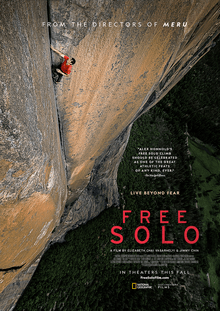
In 2018, paired with how rock climbing gear itself had continued to evolve to become more lightweight and comprehensible, the sport “hit mass media” with the movie Free Solo. One man climbing El Cap without any equipment, an immensely popular natural landmark in Yosemite, had managed to captivate the eyes of everyone and spur, as McGarraugh explains, a “new generation”. And, there was “another generational change” that came “following the pandemic”. The community had obviously shrunk and, coming out of it, people were looking for a way to “go outside and do something fun”. “Climbing was one of those things”. Coming out of the pandemic, climbing had, all the sudden seen its image completely changed. Whereas before it was shrouded in exclusivity, being “dominated by white guys”, it was now seen as a unique and intriguing sport, more open to others and trying to break the mold of its past. It became open to both men and women, with an extremely narrow performance gap between the two, and gender roles being broken. Climbing was before, considered inappropriate for women, but, very quickly, this image was shattered.
As McGaurraugh explains, Sender One has been able to spread around LA and “find a foothold within each community” and city that it arrives in. Climbing has become something almost everyone at least knows about. This “sense of community, especially now in the information age”, has attracted many to the sport, on top of how “personal” it is. As McGarraugh explains, “each person has their own reason, inspiration to go climbing”, with their own goals to hit. Whether that be making it halfway up a route, rising to the next level or simply developing strength, it’s ultimately a sport played with yourself, and that intimacy attracts many.
But with such a massive rise in popularity, comes the problem of safety. It’s no secret that many see climbing as a dangerous and especially scary sport. “Manag[ing] risks and work[ing] on building a good culture” has become a massive priority at Sender One and gyms throughout the world. Oftentimes, waivers must be signed and most have to go through some sort of orientation to “explain what rock climbing is”, teach them how the ropes work, how to stay safe and ultimately “help people find a new passion”. The large structures in climbing gyms might seem daunting at first, but, as McGaurraugh explains, his responsibility as a gym manager has become to ensure that “people feel prepared to climb” and introduce them to the sport and the community.

With its recent addition to the Olympics in the Tokyo 2021 Games, and reappearance at the Paris Olympics, climbing has continued to crawl its way into mainstream media. Figures like Adam Ondra or Janja Garnbret, massively famous in the climbing community, have started to become known past the boundaries of the sport. And climbing is seeing more competitions on the horizon, already scheduled for the LA 2028 Olympic games and the International Federation of Sports Climbing organizing more competitions and events every year. Climbing will certainly only see its popularity continue to rise in the future, as a new generation of climbers builds itself on the ideas of curiosity, warmth and “inclusivity”.




 lilagazette.com
Leave a comment