
While the global focus on eliminating plastic production and usage is crucial, it leaves a critical question unanswered: what do we do with the plastic waste that is already present in our waters? A Californian company is making sure the coast is clear.
By Sofia Reinhardt – 11th grade.

While human beings concentrate on reducing the creation of new plastic, the colossal quantity of existing waste is often disregarded, resulting in polluting our oceans. Overlooking this prominent waste lets down our environment and planet. Diminishing production of waste does not eliminate the rampant damage that has been done and its negative environmental impact. Other brands advocate for a plastic-free future, however this overlooks many big problems at hand. For that reason, it is imperative that we, as human beings, take responsibility for the wellbeing of our planet and acknowledge this pre-existing waste.
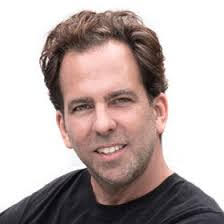
Promoting this ideology, is the proactive man, Rene Hallen. A man whose mission is to replace single use products with ones made from 100% recycled ocean bound plastic, using a circular economy. He discovered his love for the Ocean through his passion for diving. He grew severely disappointed with the state of our ocean and decided to make a change. From this, he had the idea of utilizing the existing plastics within our rivers before they reach our oceans. The waste is entirely collected and recycled plastics that are already created ; carefully retrieved from the United States and Central America.

Resulting in Rene’s brand Buoy, to which he is the founder and CEO. The first product of this brilliant idea was the reusable water bottle. Following this, the brand extended their business beyond water bottles and introduced many new containers such as tupperware and coffee cups. Buoy offers their products to many operations (such as restaurants, festivals, coffee shops etc…) with the only “turn key reusable system.” With each Buoy container, the earth can be saved from the production of at least 1000 single use containers, made of elements such as styrofoam and virgin plastic.
LILA Gazette had the opportunity of interviewing Rene Hallen in order to deepen our understanding and broaden our knowledge regarding this topic.
- What inspired you to start this project and what are your hopes for this brand and its impact?
Since I moved to Los Angeles about 10 years ago with my family, I spend as much time as possible in the ocean. My passion is free-diving and while training I met many people that are working actively on ocean conservation. Experiencing ocean pollution myself inspired me to start Buoy with the core mission to prevent plastic from going into the ocean and to recycle waste collected and intercepted in rivers and coastal regions into reusable food containers.
From the start I aimed for the take-out industry, to replacing disposable food containers with reusable ones. Waste from disposable food packaging makes about 20-25% of all waste in landfills. I hope to be able to scale our reusable food ware system, Buoy Zero, to become one of the leading systems in this market space so we have the largest impact on waste reduction possible.
- What has the success of the brand been like so far, and what main challenges have you faced?
We succeeded in building one of the most sustainable supply chains possible. We source our recycled material in Mexico and California and manufacture locally in a solar powered plant. We take back damaged products and re-recycle those into new ones in an endless loop.
Our products have an inherently negative carbon footprint and are therefore the first of their kind.
We started our reuse system in different cities and universities.
We also have a reusable water bottle that just won the prestigious Reddot design award and our company is nominated for being the most innovative reuse company in the US, the winner will be announced at Circularity 24 in Chicago next day.
The biggest challenge is finding the investment which we need to scale our reuse system into more cities and to manufacture additional products.
- How does the circular economy using Bowie containers work?
We developed an app based reuse system where customers find restaurants on the Buoy Zero app that use our food containers for take-out. We offer inventory and scanners free of charge to the restaurants but charge every business a usage fee per used container that was scanned out when leaving the restaurant.This fee replaces the cost of a disposable food container which the restaurant usually buys.
The system is free of charge to customers, we only charge a fee in case food containers aren’t returned within 2 weeks.
We collect used containers from drop-off stations we put in place, bring those to our washing facility, clean those and re-distribute them back to the restaurants.
- Is it safe to eat and drink out of the products, because we hear a lot about micro plastics affecting health and how plastics can often leach into foods and water?
We use pure HDPE, recovered from discarded milk and juice bottles only. HDPE (No2) has no endocrine disrupting components, no PFAS chemicals and no toxic additives that could leach into food or beverages. It is the food safest plastic and therefore used in hospitals and pharma because of its non-reactive attributes towards any substances. HDPE is a very strong and basic polymer composed of Hydrogen and carbon molecules, we don’t add any additives to soften the plastic or to make it transparent, which would male it toxic.
We have FDA clearance on our resin and did testing on chemical leaching with the NSF, the highest standard in the US.
- What other ways are you trying to spread your message?
We mainly try to spread our message by building our social media presence with fun videos and facts. We have some press coming up with the awards we won and I’m talking to a few influencers to help us with all this.
- Why do you think ecological products like this are often harder to promote and get going and do you have any advice for the younger generations concerning how they can help contribute to supporting our environment and its causes?
When you try to promote a sustainable product and you base your communication only on the environmental aspect, you will fail. A product needs to be 3 things: practical, good looking and environmentally sustainable. If a product hits all 3 aspects and you promote all of them, you have a chance to get it off the ground. That’s why we tried to make good looking and also practical products in addition to the fact of them being sustainable.
A good example is Tesla, if they would have only promoted the fact that the car runs on electricity, they would have failed. They based their first communication on the fact that EV’s can be fast and that the Tesla is faster than any other street car.
We target the younger generation as you are the hope for our planet. Unfortunately you will have to clean up the mess of your parents’ generation. We can only help to lead the way and then pass it on to you 🙂 We count on you!


 lilagazette.com
Leave a comment