
Today, Model United Nations is a standard in schools and in college applications all over the world. In fact, we have an MUN club here at LILA! But where did this tradition come from? Why did we start mimicking an international organization?

By Malachi Newman – 7th grade.
The first “prototypes” of MUN date back to 1921, and took place at Oxford University, once invented by Mir Mahmood. Although, at the time, these conferences were referred to as “International Assemblies” and weren’t modeling the United Nations–which hadn’t even been formed yet, but the League of Nations.
The League, founded in January of 1920, marks the victory of the Allied Powers, and the signing of the Versailles Treaty at the Paris Peace Conference in 1919 and was created to restore peace after WWI. The organization was founded by a total of 42 nations. Although, the United States never joined the League of Nations due to opposition from congress.
The tradition of International Assemblies spread to the United States, Harvard University being the first school to adopt the activity. After WWII, the International Assemblies switched to modeling the newly founded United Nations. Thus begins MUN. The first ever conference was held at Swarthmore College in 1947.
Today, MUN is found not only in the United States, but all over the world. NMUN (National Model United Nations) for example, which is the most prestigious MUN organization in the United States. Their conferences of 2023-2024 included over 5,000 students from 123 countries. Some of their conferences take place at the UN headquarters in New York City, immersing these student participants into the perspective of UN officials.
World issues
Typically, at MUN conferences, participants (or delegates) are divided into committees (or branches of the UN. e.g.: UNEP, UNICEF, UNESCO, etc.) just like the UN is. There are novice committees for students newer to the MUN process and General Assemblies (GAs) for more advanced delegates. These groups are also designated a chair or chairs who monitor, oversee, and manage the flow of the committee. Each committee is to discuss one or more topics, usually world issues.
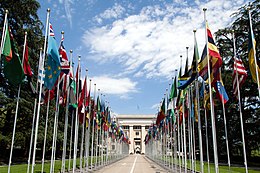
In a committee room, there are four main types of speaking time that take place: the General Speakers List, moderated caucuses, unmoderated caucuses, and Voting Bloc. The General Speakers List (GSL) is when delegates get to share their designated country’s opinion on any subject related to the main topic. After each speech, other delegates have the opportunity to respond with comments. Moderated caucuses are similar to the GSL, but the speeches are restricted to talking about a specific subject, and there are no comments. Unmoderated caucuses, on the other hand, are very different from the rest. Unmoderated caucuses are when delegates can get up from their seats and discuss their opinions with other delegates and can start forming groups.
MUN at LILA
These groups will eventually draft and create resolutions, which are the mock of the formal papers that the UN writes to solve the world issues they discuss. Finally, at the end of a conference, there is always a Voting Bloc. This marks the end of the conference and the completion of all resolutions. At this time, delegates come up in their groups to present their resolutions. Then, like in the GSL, other delegates may ask questions about each resolution. After all the presentations, delegates vote on which resolution to pass to resolve the topic that they discussed. All these types of speaking time are also known as “motions” and they are all voted for by the delegates in the committee. In other words, the participants of the conference have a very big say in the flow of the conference.
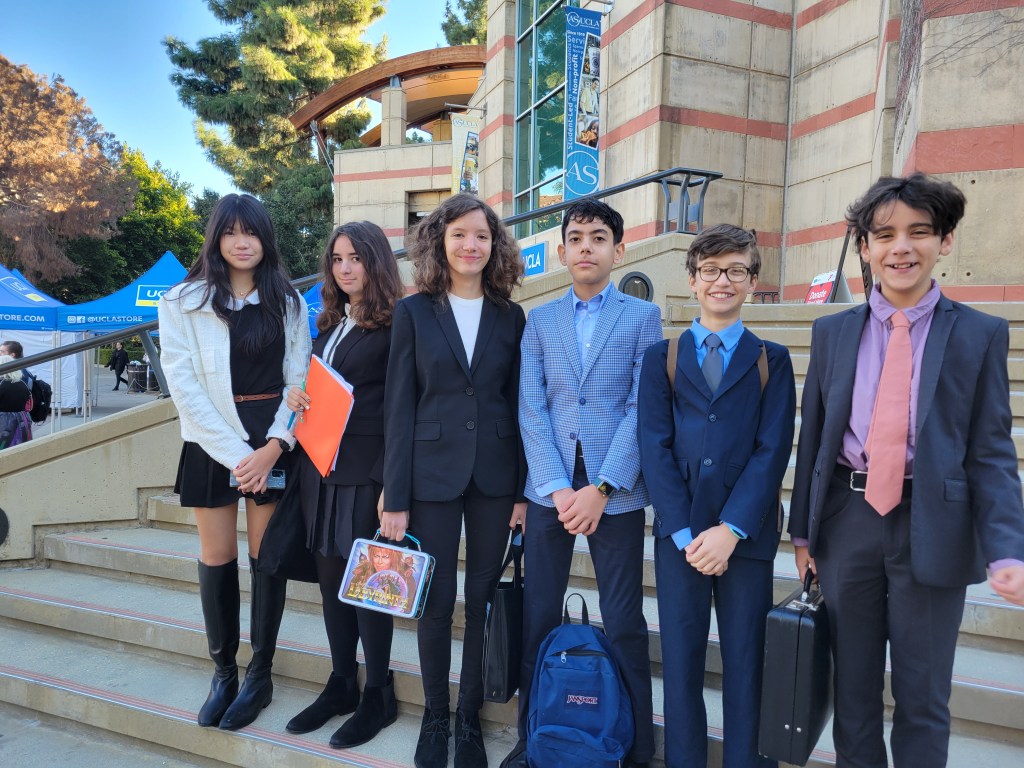
At LILA, we have our own MUN clubs. We participate in various conferences including the ones held at UCLA (BruinMUN) and USC (SCMUN). The High School Model UN group is privileged to travel to New York City for the NHSMUN (National High School Model United Nations) held at the Hilton Midtown Hotel! At our MUN clubs, students work on the preparation for upcoming conferences, mock resolutions and mini committee conferences, and much more!


 lilagazette.com
Leave a comment