
A close friend and collaborator, Wentworth pays tribute to the great director and artist, who passed away in January 2025.
By Loïc McAllen – 8th grade.
John Wentworth was a close friend and collaborator of David Lynch, working with him on many of his most important works. He started as David Lynch’s assistant on Blue Velvet and went on to produce Lynch’s shows and movies: Twin Peaks, Twin Peaks: Fire Walk with Me, On the Air, Hotel Room, and Mulholland Drive. He currently lives in Mammoth Lakes, and served as mayor of the town for two terms. He is also the chairman of the non-profit foundation, MLTPA (Mammoth Lakes Trails and Public Access). We spoke online from his home.
How were you first introduced to David Lynch and, were you already familiar with his work when you applied to be his assistant?
I first became aware of David Lynch when I was an art student in Providence, Rhode Island. I went to a movie theater that showed midnight movies and had couches. The film playing that evening was Eraserhead. That kind of changed my life. Many years later, I ended up moving to Los Angeles where I was a student at the American Film Institute. I became aware that David had also been a student at the American Institute in a very different era, and one night, he was hosting an in-person speaking event. It was in a restaurant down in Venice so I went and saw him. I was overwhelmed by what a warm, personable, funny, engaging, inspiring human being he was. I never really met anybody like that, especially coming from someone who produced and made Eraserhead. I was very determined and told myseIf, ok, I need to work with this guy some day. I went about finding a way to get a job with him.
When working with David Lynch, what was the hardest task you were faced with?
There weren’t any hard tasks because everything was always a lot of fun. It was always interesting. During the second season of Twin Peaks, we produced 22 episodes. My schedule was for example: Monday; I would work from 9 AM until 2 AM; then the next day I’d have to come back in at 8 AM. The hours were kind of long but it was fine.
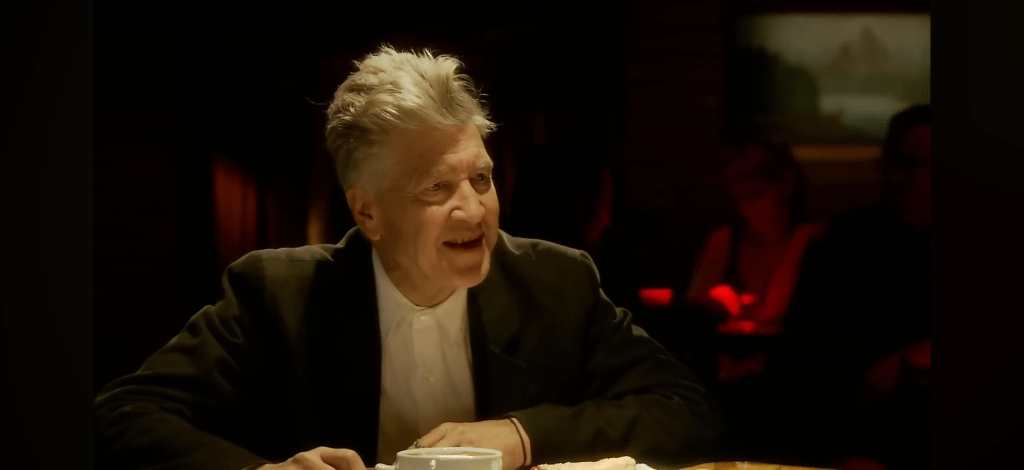
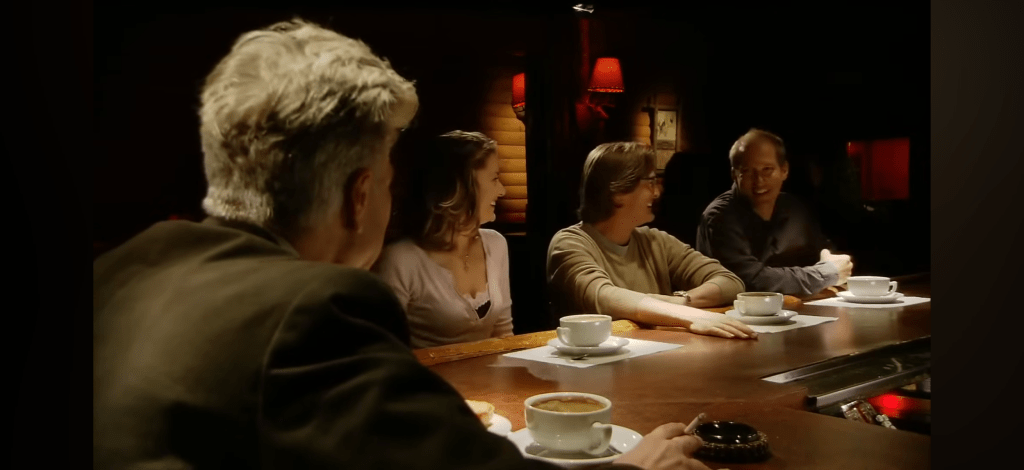
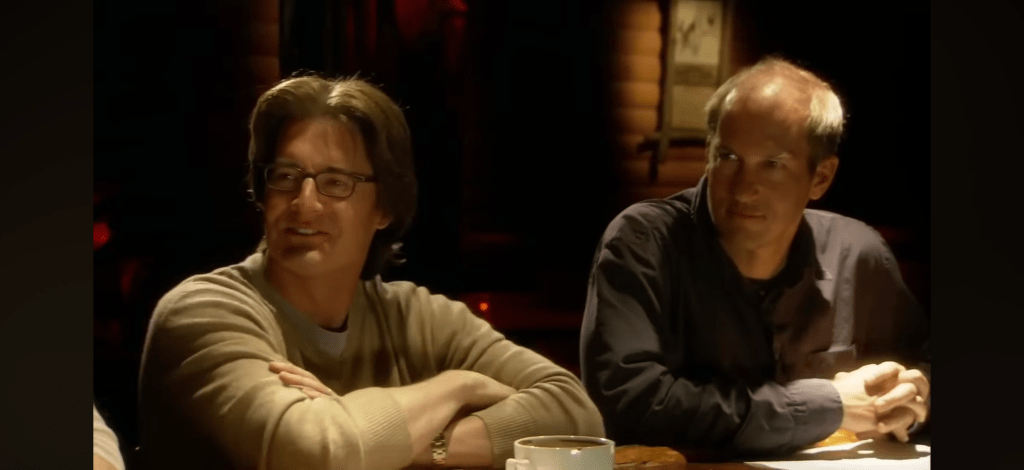
In a Slice of Lynch (a 2006 documentary), you share some interesting memories about sound recording for Twin Peaks. When you had to record the sound effects, did you just go into the woods and record sounds on your own, or would David have specific sounds he was looking for?
What I did was I took the script for the pilot, and I broke it down. I went scene by scene and documented the types of sound effects that I thought would be needed. Then I made a list, like a production list for myself, and I would go and find places where I thought I could get the sounds that I needed. We were on a very tight schedule and actors were always coming and going. So, I was working pretty independently for the rest of the production.
How did you become involved in Twin Peaks: Fire Walk with Me? Did David contact you as soon as he decided to do the feature?
As I recall, Twin Peaks: Fire Walk with Me rolled right out of the series. We took a break, then there was some shooting that went on, and we just went into post production right after that. It was pretty seamless.
Then there was the 1992 show On the Air. Were you disappointed when the show got canceled?
Well, not really. It was when David had a lot of things going on, and there were a lot of opportunities. And when you do this kind of work, some things hit, some things don’t. I mean, you would go crazy if everything was a hit. So it was disappointing, but it seemed natural and organic.
When working on the pilot of Mulholland Drive (when it was originally a TV series), how long was the series planned to be? Had David already told you what the entire show was going to look like, or was it developed one episode at a time?
The pilot episode was completed and delivered to the network without any trouble at all. We were pretty happy with it, but then Mulholland Drive ran into some trouble. At the time the pilot was to be delivered, I think there was some disagreement going on between David and the studio. I’m not sure exactly what was happening. So the pilot was delivered, but I don’t think it was delivered in a way that the studio was prepared to put it on the air. In the script, it was clear that it was written as a pilot with a number of interesting characters, and a number of interesting storylines that could be pursued. I don’t think it was finished in a way that David was happy with, and it never aired.
Why did you leave the world of film and decide to take a new field of work in Mammoth?
Most of the work that I did for David was in post-production. When we started off, (with, let’s say, Twin Peaks), I was working in TV post-production. Digital technology was just starting to show up. And it was pretty revelatory. You used to edit a film literally by splicing the film, and then you would scotch tape the edit. Very different from doing random access editing, where everything is living in computers. It started off with telecine and color correction. It was all very technical, but it was all analog based. Then digital ways of working emerged. Cut to several years later, after we’ve finished Mulholland Drive, and we started working on a website, David Lynch.com. David had this realization that he didn’t need a crew of a hundred people. He could go down to Best Buy and buy four, five or six digital video cameras and work with a very small crew, making the movies exactly the way that he wanted to make them. Coincidentally, I realized that the job I had, and the work I did, might not be so important going forward. I was a little antsy to get out of Los Angeles and so, I came up here, and I rebuilt a house. That was that. I stayed and I’ve gotten involved in politics, and nature-based recreation issues. I’ve been here ever since.
What impact has David Lynch has had in your life, and what are the most valuable things he taught you?
David’s had a significant impact on my life. Trying to make a living in Hollywood and show business is difficult, no matter what you’re trying to do. But I was very fortunate to work with him during the peak of his own career. We had a good friendship. He was a dear friend and it really helped me to have work that was paid but also inspiring. His work really helped me navigate through a very difficult industry and a very difficult business. As David would say, “it was a beautiful thing”. It was wonderful to have the opportunity to work with him. He demonstrated what it means to be an artist. How to act, live and work like one. He is a wonderful guy and I loved him dearly.
What is your fondest memory of David Lynch?
There are too many fond memories and they just all roll up into one. I have a beautiful, fond memory of David that will stay with me for the rest of my life.

 lilagazette.com
Leave a comment