

The story of the Oakland Athletics is one that is rooted in grit and resilience. But now facing a move to Vegas, what caused the departure, and what are the effects on the City of Oakland?
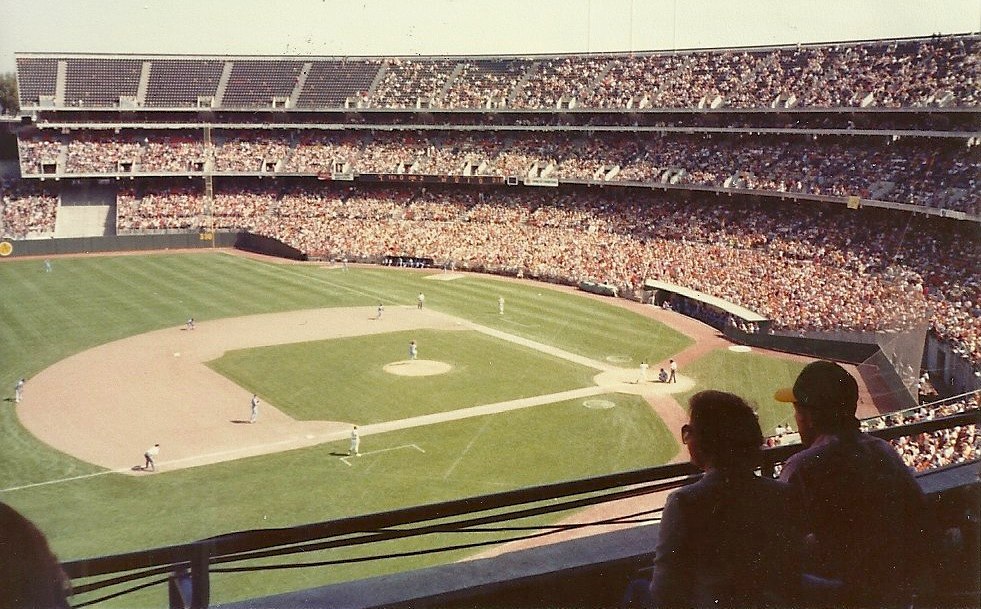
By Heath Woollard – 10th grade.
From the very beginning, the city of Oakland was always the underdog. Ever since the mass migration of the 1849 Californian Gold Rush, it always seemed as if they were stuck inside their neighboring city, San Francisco’s, shadow. When comparing them side by side, San Francisco is by far the more marketable of the two. Attractions such as the Golden Gate Bridge and highly successful sports franchises such as the Giants and 49ers offer a highly promising and prosperous experience. Oakland however, has none of those things by comparison. But what they do possess is something most cities could only dream of having: Resilience. Such resilience can be found within their own sport franchises, the most notable of which being the Oakland Athletics. Although, given recent events, the very team that represented the city moved to Vegas, leaving its fanbase and community sorrowful and desperate.
The Athletics, otherwise known as the A’s, were initially founded in Philadelphia, a city on the complete opposite side of the country to where they play today. After a string of mediocre seasons and lackluster performances, owner Charlie Finley decided on moving the team to Oakland. The move bolstered in popularity via their young all star candidates Catfish Hunter and Reggie Jackson. In less than a decade of their move, they had already boasted 3 World Series Championships. Whenever the A’s were on top, Oakland flourished with it. In tandem with the A’s managerial success, the city of Oakland flourished in return. ‘’Oakland’s population rebounded in the 1980s and surpassed the 1950 level in 1990.’’(Britannica.) When the A’s beat their rival, the San Francisco Giants, in the 1989 world series, Oakland began to rebuild and modernize many of their run down neighbourhoods, now competing with their neighbour in the housing market. ‘’Oakland offers a more affordable alternative to San Francisco while maintaining it’s own unique appeal.’’(Redfin.) Despite continued success for the A’s franchise through the clever sales tactics of the 2000s, a looming shadow would begin to envelop the team, and in turn, the downfall of Oakland itself.

By the mid 2000’s, the Athletics were experiencing quite a rough patch. After riding the hies of the Moneyball era, which were known for buying a ton of good players for dirt cheap prices and giving them low salaries. Yet, this caused these players to ultimately leave in favour of teams that would pay them far more. In turn, they hired a new manager, John Fisher, in 2005, in hopes of change. The problem is, Fisher embodied everything that the A’s weren’t. Unlike the little guy synonymous with Oakland as a whole. Fisher was ‘’the youngest of GAP founders Doris and Donald Fisher’s three sons.’’(Forbes). Due to this, he viewed the A’s franchise as a business venture rather than putting the fans and city of Oakland at the forefront.From the very beginning, he seemed to be extremely uninterested in the A’s franchise. Moreover, an interview from the SF Gate revealed that ‘’He keeps a low profile, even at A’s games, where he often sits in the diamond level seats a few rows behind home plate.’’ As the years passed into the 2010s, the state of the franchise, along with the city, only deteriorated further. According to Marcrocharts, in 2018 alone, ‘’The Oakland C.A crime rate was 1273.74 per 100,000 people’’, twice the national average. The once vibrant neighbourhoods that enveloped the city had been left completely abandoned. The Oakland Coliseum, the location for A’s games, was poorly maintained, with no effort for renovations.

All these factors led towards record low attendance, averaging merely 11,528 fans according to ESPN. But the final nail in the coffin came when Fisher announced the construction of a new ballpark in Las Vegas, a city that stood as the complete antithesis of what Oakland stood for. Inevitably, on September 26, 2024, the A’s played their last game at the Coliseum, where over 47,000 fans showed up in attendance, carrying with them the last embers of the Oakland Sports spirit.
Since then, the city of Oakland has been actively attempting to let the past die. Due to the city owning half the land of the Coliseum, they plan on demolishing it in favour of developing new housing, restaurants, and maybe new stadiums, seemingly coming back right to where they started. As for the A’s, now simply referred to as the Athletics, are now playing their 2025 season in the San Francisco Giant’s minor league ballpark in Sacramento, as construction of the Vegas stadium will be complete by 2028. In a sense, these events are completely indicative of what both parts formerly stood for. What was once a scrappy, rag-tag city that channeled its rise through is Baseball team, is now left as a mere husk of who they once were.



 lilagazette.com
Leave a comment