
The dual Writers and Actors strike shut Hollywood down for months, affecting many livelihoods of people in the industry. Last week, the strike finally reached its end, with an agreement between actors and studios.

By Amandine Galama – 11th grade.
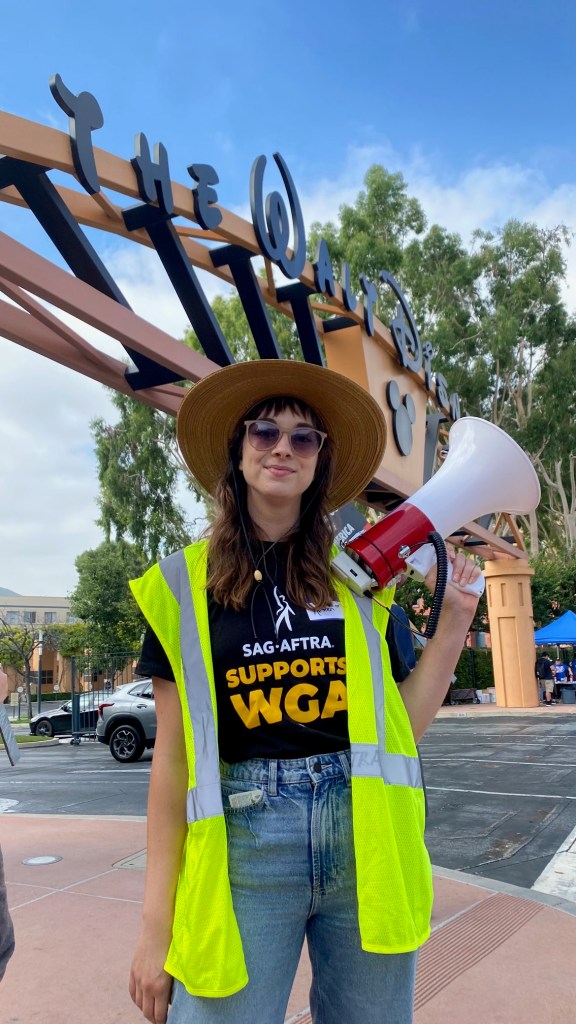
With the United Auto Workers, UPS drivers, teachers and hospital workers’ strikes, 2023 has proven to be the year of Labor strikes. In Hollywood it has been no different. For the past few months, Hollywood has been in turmoil. The dual Writers and Actors strike has resulted in the cancellation or postponement of many movies and tv shows, and cost the California economy an estimated 6,5 billion dollars. Many livelihoods have been impacted, and an estimated 45 000 entertainment-sector jobs have been put on hold. Now, after six months, the Hollywood strikes are finally over. On day 136 of the writer’s strike, I went to the picket lines, in front of Walt Disney Studios in Burbank, to interview those affected.
The strike began in May of this year, with the WGA (Writer’s Guild of America). They were soon joined by SAG-AFTRA, the actors guild, which effectively shut down Hollywood, in the first dual writers and actors strike since 1960. Those strikes lasted six weeks and resulted in healthcare and pensions, as well as a residual system, a system in which people who worked on a film or tv show are paid every time it airs on tv. The reasons for striking today are pretty similar to the reasons of the 60s. Historically strikes have happened with changes in technology, and the same is true now. The impact of streaming services on the residual system, as well as the role of Artificial Intelligence in the creativity process, have been important reasons for the strike.
While streaming services do technically still pay residuals, it is only a fraction of what it was before, and as a result, many people are struggling to get by, now they barely make any money off of residuals. “So much of television and film has shifted to streaming, and the business model that makes this whole industry work hasn’t adapted to the streaming industry. We aren’t being compensated in a fair way as writers”, says Ryan Keleher, writer for the tv series S.W.A.T. “They’re not being compensated as actors. IATSE (International Alliance of Theatrical Stage Employees) members also aren’t being compensated that way. So, someone at the higher levels of these studios needs to come up with a new fair equitable business model to address the new world we live in,” he added.
Artificial intelligence and its impact on film has also been a major issue in the strikes. AI has the potential to be used in the creative process and threatens to replace the work of people. Both writers and actors are at risk of AI taking over their jobs. Background actors are especially at risk, as it is now possible to scan a background actor, and use their image and likeness in a film, while only paying them for one day of work, but other actors are also impacted. Just last week, actress Scarlett Johansson took legal action against a company that used an AI app to use her name and voice likeness in an ad without her permission.
Another important issue in these strikes is the distribution of wealth. Of SAG-AFTRA’s 160,000 members, only around 15% of them make the minimum $26,000 a year to qualify for healthcare coverage. “We have movies making billions of dollars and people are still living on food stamps,” says WGA member, Emily Cheever Maloney, who has been working as lot coordinator, organizing the strike. Her last project, The Company You Keep was canceled and taken off air due to the strikes. “We are not asking to become the richest people in the world, […] we are just asking to be able to afford to live in the city we are required to live in to do the jobs we love.”
Writers and actors aren’t the only ones affected by the strikes, but also others in the industry. Editor Jessica Chandler’s show was canceled due to the strike, and her husband, Brian Chandler, despite working as an editor in unscripted television, has also had trouble finding work. “Because there are so many people who are unemployed our wages are way down. I just did a short job that was at 20% less money than I would have gotten a year ago. And, they are also non-union jobs, which means we are not getting our benefits.”
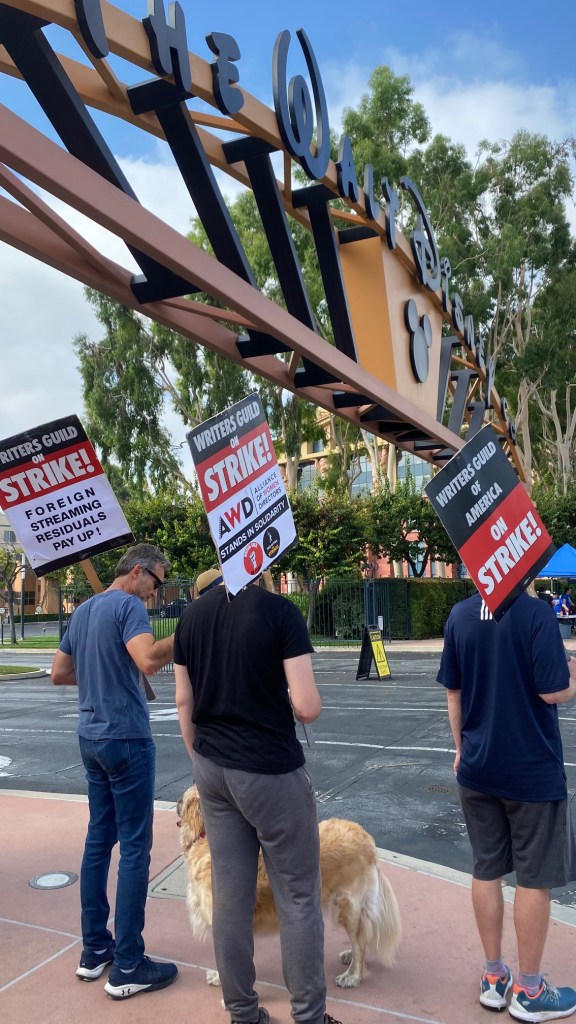
Another editor and Editor’s Guild Board Member, Erik C. Andersen also added that the end result of the WGA and SAG strikes will impact how IATSE will bargain for their contracts when their current contract expires in 2024. The result of the SAG and WGA contracts will be important for the IATSE unions due to pattern bargaining, meaning that when SAG-AFTRA and the WGA get a better contract, it will set the bar for future IATSE contracts. “The main reason why I’m out here on the picket line is because of patterned bargaining. […] I’m out here supporting them, because they’re negotiating on my future and what pay increases I’m going to get when our contract is up next year,” stated Andersen.
After five months of striking, the writers were finally able to reach a deal with the studios, ending the Writer’s strike in September. The actors remained on strike, even after the WGA settled, as they and the studios were unable to agree on key issues, notably the use of AI. However, on Wednesday November 8th, a tentative agreement was made, which put an end to the longest strike in the history of SAG-AFTRA after 118 days. Even though the strike is now over, work will probably not be able to resume until January. It is difficult to get productions started quickly, and there will be many shows all wanting to start at once. The summer of 2024 film season is still at risk, because many films have been delayed to 2025 due to the strikes.
During my interview I asked actress Kristen Phaneuf what message she would like to send to studios. “Find your humanity. You’re making a product that people consume and their best and their worst. When the world ended during Covid, we turned to television, video games, and movies to comfort ourselves. We are humans telling human stories. We feel that empathy. Remember what you’re creating.”



 lilagazette.com
Leave a reply to Eva Boyd Cancel reply