
TRUMP 5/7 Greenland, the icy, almost deserted island of the Arctic. Why so much colonial interest ? Why does this barren wasteland spark opportunity for Trump? The LILA Gazette delves into Greenland from the very beginning of its civilization to answer modern-day political questions.

By Malachi Newman – 7th grade.
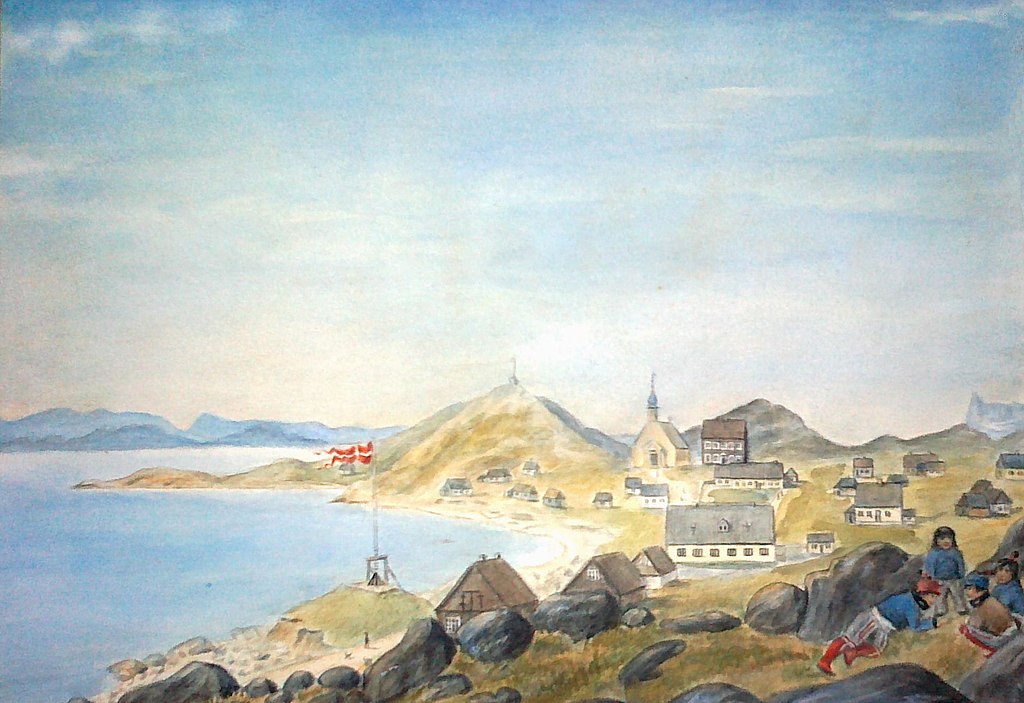
As Donald Trump begins his second term, the idea for the annexation of Greenland has been brought up several times. This sort of hypothetical discussed land-stealing between politically allied countries is arbitrary and unusual. Especially today, in the contemporary world, where this process evokes colonial times from hundreds of years ago, now fondly hated upon and viewed as unethical. Because of these threats from Trump, even a satirical petition in Denmark was signed by hundreds of thousands of people offering to buy California off of the United States. So, why Greenland? First, we must start with the history of the island, and acknowledge its complicated story.
Inuit peoples are estimated to have settled Greenland in 2,500 BCE, over 3,000 years before any attempt at settlements by European colonialists.
In 982 CE, the Norwegian explorer and exile from Iceland, Erik the Red, set foot on Greenland and, four years later, returned on an expedition which led to the development of two settlements on the island: East Greenland and West Greenland. Within the next two centuries, Christianity had been brought to Greenland, which led to the establishment of a bishop’s seat on the island in 1126.

This first colonization attempt was long while it lasted, but eventually failed. In the 15th century, the people living in the settlements stopped to reside there.
After over a century of purely Inuits populating the island, once again, in 1721, settlers attempted to colonize Greenland. This time, it was settlers from the united kingdom of Denmark-Norway. These settlers, like the previous ones, brought back Christianity in the form of a Lutheran mission.
Through WWII, Greenland was temporarily kept under the safety of the United States, as Denmark had already been conquered by Nazi Germany. After the war ended in 1945, Greenland was returned to Denmark. Just after, during the Cold War, the American Thule Air Base in the northwest was used to carry nuclear bombs. Due to the danger of the area after its construction in 1951, the native population in the area was forced to relocate. The base, today, has been renamed to the Pituffik Air Base to acknowledge the indigenous population of the area, is still controlled by the United States, and is now used by the Space Force.

Greenland, apart from being a Danish territory and being used for American military purposes, has its own history of autonomy. A new flag for the region was adopted in 1985, made by Greenlandic politician Thue Christiansen. In 2008, a referendum was held, and Greenland gained a semi-autonomous government a year later. This means that Greenland has its own elections and parliament, but is still recognized as a territory of Denmark, with all of its citizens politically considered Danish.
Now, with global temperatures rising and oceans melting, Greenland’s geographic location is seen as a strategic advantage for international trade. The region around the Arctic Circle will melt and open up a gateway, called the “Northwest Passage” between major economic powers in the region. This would make trade more efficient and easier between Russia, North America, and Europe. This desire for better exporting prominence on the world stage could also explain Trump’s wanting to annex Canada as the 51st state and to reclaim the Panama Canal for the country.
Trump’s yearn for new US territory is, thus, not as simple as it seems. America’s quest to ‘manifest destiny’ is ongoing and colonialist plans for Greenland are clearly still thriving.
LILA Gazette 7 part coverage of the Trump administration :
Worldwide: Trump as seen abroad
The Closure of the Department of Education impacts the most vulnerable students
Opposition to Trump’s cuts to research takes the streets of L.A.
Why Greenland? Trump’s strange colonialist attempt
Marcel Dirsus: “We are witnessing a frontal assault on the institutions”
Trump presidency rocks the nation
Admiral Stavridis: How the Evolving Trump Administration Policies Impact International Security




Leave a Reply