
The penny: a staple of US money for as long as most can remember, has now dropped out of circulation. With this legacy coming to an end, it is time to reexamine the history of the coin.
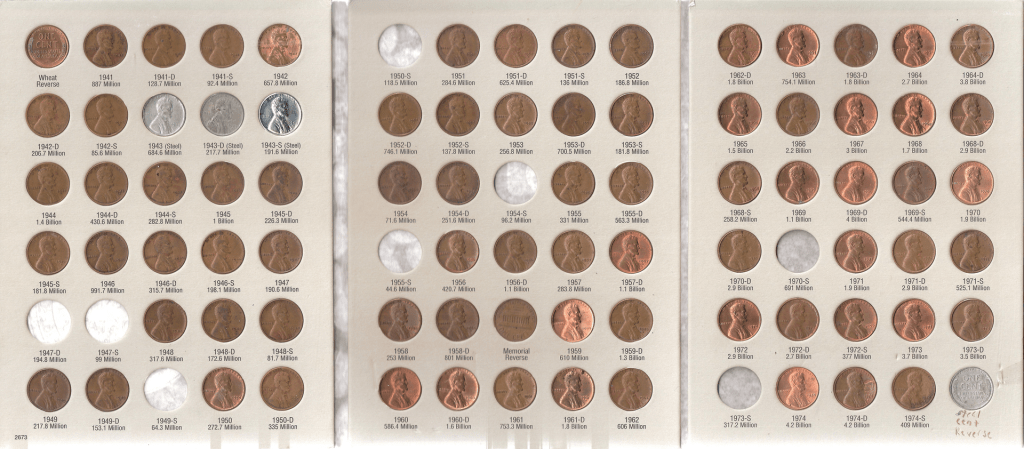
By Stella Ly – 9th grade.
According to the U.S. Mint (under the Department of Treasury, it manufactures, sells, and distributes U.S. currency), as of 2024, it cost 3.70 cents to make one penny. This is more than triple of what a penny is worth, and the manufacturing cost doesn’t seem to be going down any time soon. As a result, President Trump and the Treasury department have deemed the manufacturing cost of a penny not worth the value it holds, and penny production will have officially stopped as of November 2025. Despite this, pennies continue to be a legal tender in the U.S. and there are more than 114 billion pennies still in circulation.
Soon after the creation of the United States Mint in 1792, the penny would become the first coin they produced. Before this creation, American currency consisted of a mixture of foreign coins for trade. However, throughout this exchange, the most popular coin was the British penny. Thus, when the U.S. began their own currency, the first coin to be made was the one-cent piece.
Initially, the coin was made out of pure copper, and represented liberty through the design of a woman with long, flowing hair. Eventually this design would be modified to her hair wrapped up in braids, then completely transforming the coin to the smaller Flying Eagle cent. Nevertheless, more than a hundred years after the production of the original coin, the design would shift yet again to represent Lincoln on his 100th birthday in 1909. Then, in 2009 a shield with the United States motto, “E Pluribus Unum”, meaning out of many, one, was added to the reverse side of the coin. Today, the penny honors President Lincoln to symbolize unity, integrity, and perseverance.
However, today pennies are copper-plated zinc, which is both lighter and cheaper than the original copper. This replacement was made during World War II when copper was needed for military weapons, so zinc was used as an alternative. Pennies today are made out of 97.5% zinc, and only 2.5% of copper.
What was once a symbol of the nation’s spirit, is now disappearing, leaving behind a legacy of distinction and prestige in the fast-paced world of currency and economics. Whether pennies end up in the hands of collectors or on the ground, they will not be forgotten as the turning point for United States currency.


 lilagazette.com
Leave a comment